
Article Summary:
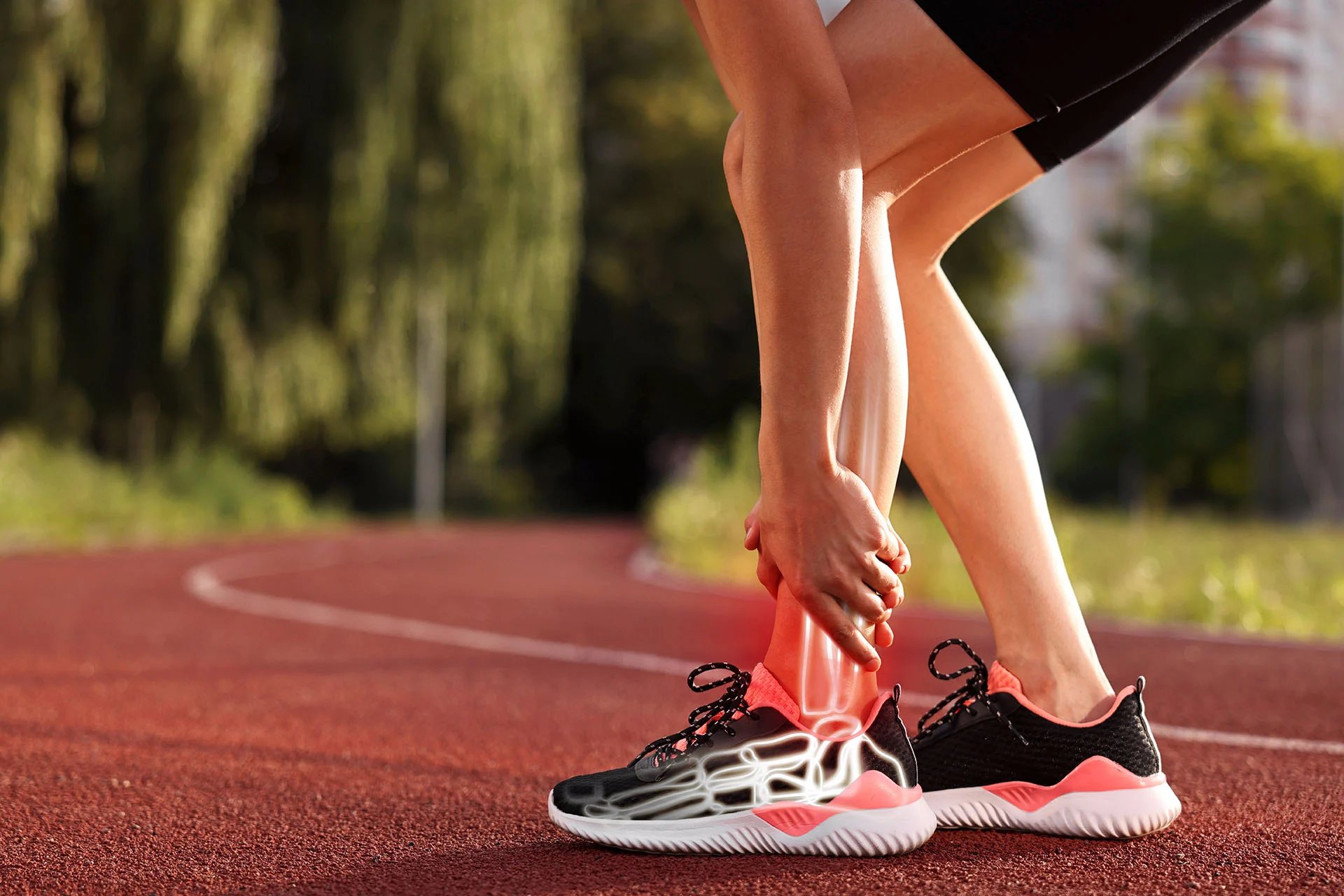
Achilles tendinopathy stands as one of the most persistent and frustrating overuse injuries among court and racquet sport athletes. Developing insidiously over time, it rarely resolves with rest alone and carries a high risk of chronicity when underlying load dynamics and biomechanical deficits remain unaddressed. This article breaks down the clinical reality of Achilles tendinopathy, why court sport movement patterns create unique vulnerabilities, why traditional rest-based management fails, and how an evidence-informed treatment model achieves lasting resolution at Rally Point Health and Rehab in Markham.
Authored by Dr. Nicholas Cheng, Canada’s sole RacquetFit Certified healthcare provider, serving patients across Markham, Unionville, Richmond Hill, Scarborough, North York, and the Greater Toronto Area.
It begins as a subtle stiffness along the posterior heel during the opening minutes of your warm-up. You shake it off, movement warms the tissue, and you play through it. A few court sessions later, that tightness persists, now accompanied by a localized tenderness that lingers long into the evening following a demanding match.
Most racquet and court sport athletes at this stage adopt the same strategy: rest for a few days and wait for it to subside.
This approach overlooks a fundamental clinical reality: Achilles tendinopathy rarely resolves through rest alone. Temporarily eliminating mechanical load may quiet pain signals, but it fails to restore the tendon’s structural load capacity, correct upstream biomechanical dysfunctions, or build the tissue resilience needed for high-intensity court demands. Upon returning to play, identical loading stresses act on an unadapted, vulnerable tendon, restarting the injury cycle.
At Rally Point Health and Rehab, Achilles tendinopathy is among the most frequent overuse conditions treated within the local pickleball and racquet sport community. It is also a condition where early, biomechanically targeted management yields the most profound impact on recovery trajectory and long-term joint health.
Understanding the unique mechanical and structural demands of this injury is the critical first step toward lasting resolution.
What Achilles Tendinopathy Actually Is
The Achilles tendon is the largest and strongest tendon in the human body. Connecting the gastrocnemius and soleus muscles of the calf complex directly to the calcaneus (heel bone), it transmits the massive kinetic forces generated during every explosive push-off, landing, and direction change inherent to court sports.
Achilles tendinopathy develops when the cumulative mechanical strain placed on the tendon exceeds its structural capacity to adapt and repair between activity bouts. This results in a degenerative matrix response: disorganized collagen fibrils, an increase in non-collagenous ground substance, and the ingrowth of hypervascularity and accompanying unmyelinated nerve endings (nociception) that drive the characteristic localized pain.
This degenerative process distinguishes tendinopathy from the outdated label “tendinitis.” While tendinitis implies an acute inflammatory reaction, tendinopathy reflects a non-inflammatory, microstructural tissue breakdown. This clinical distinction is vital: purely anti-inflammatory interventions, such as prolonged rest, ice, and NSAIDs, fail to resolve a pathology rooted in collagen degeneration and mechanical overload.
Achilles tendinopathy presents at two distinct anatomical sites, each carrying unique treatment considerations:
Midportion tendinopathy occurs 2 to 6 centimeters proximal to the calcaneal insertion, in the hypovascular region most vulnerable to high tensile stress during calf contraction. This is the predominant form in active athletes and responds most predictably to structured, progressive load-rehabilitation protocols.
Insertional tendinopathy occurs directly at the tendon-bone attachment site on the posterior calcaneus. It involves a combined force profile of tensile strain and compressive stress against the calcaneal tuberosity. Managing insertional cases is more complex because positions of deep ankle dorsiflexion exacerbate compressive loading at the attachment, often irritating the tissue.
Accurately identifying the exact anatomical presentation dictates how active rehabilitation must be loaded. Applying a standard midportion protocol to an insertional tendinopathy is one of the most frequent clinical errors in Achilles rehabilitation.
Why Court Sport Athletes Are Particularly Vulnerable
Achilles tendinopathy does not affect all athletic populations equally. Court and racquet sport participants face a distinct biomechanical environment that renders the Achilles tendon a primary point of failure:
Explosive push-off mechanics. Every split step, aggressive lateral lunges, and rapid forward drive to the net demands a rapid, high-magnitude calf contraction that transmits immense tensile forces through the tendon in milliseconds. Accumulated over hundreds of repetitions per match, the total mechanical load is staggering.
Rapid direction changes. The aggressive deceleration and immediate re-acceleration required in pickleball, tennis, and squash force the Achilles tendon to absorb and redirect high-velocity kinetic energy in multi-planar vectors. This rotational and lateral stress creates a far more complex mechanical demand than the predictable, linear plane of straight-line running.
Intermittent, high-intensity loading. Unlike steady-state distance running where tendon load is rhythmic and continuous, court play consists of short, highly explosive efforts interspersed with brief rest. This abrupt stop-start profile places high peak demands on the Achilles, challenging tendons that lack specialized elastic capacity.
Disproportionate volume progression. In rapidly growing sports like pickleball, athletes frequently transition from recreational play to multi-hour daily matches. Because metabolic cardiorespiratory fitness improves much faster than dense collagenous tendon tissue can structurally adapt, a critical gap opens between what an athlete’s stamina allows and what their Achilles tendon can safely tolerate.
Biological age and tissue elasticity. The core demographic for many court sports includes adults over 40, those who experience an age-related decline in tendon vascular supply, cellular turnover, and baseline collagen elasticity. Consequently, a training volume that a younger tendon easily manages can trigger a chronic tendinopathy cycle in an older athlete within weeks of increased court time.
Why Rest Alone Does Not Work
Rest temporarily quiets pain signals. It does not resolve tendinopathy.
The Achilles tendon requires structured mechanical strain to signal cellular repair, reorganize disorganized collagen fibers, and build tensile strength. When all physical loading is removed through extended rest, that vital adaptive stimulus disappears. Tendons do not remodel or regain structural integrity in a mechanical vacuum; without appropriate physical stress, the underlying degenerative matrix changes simply stagnate.
When an athlete returns to the court following a period of complete rest, a dangerous mismatch occurs: symptom severity has temporarily dropped due to reduced tissue irritation, but the tendon’s actual load-bearing capacity remains unchanged—or has further diminished from disuse. Subjecting an unadapted, weakened tendon to the explosive demands of court play triggers an immediate flare-up, often within the first few matches.
This predictable cycle of resting, returning to play, and re-injuring the tissue is the hallmark of undertreated Achilles tendinopathy. It does not indicate an unhealable injury; rather, it proves that the management strategy failed to provide the specific mechanical input required for structural adaptation.
To truly heal, a degenerated tendon demands progressive, high-load mechanical exercise, delivered at the precise volume and intensity, in the correct biomechanical positions, with adequate biological recovery between sessions. Complete rest, passive modalities, and isolated stretching will never replace targeted mechanical loading.
The Evidence-Informed Approach to Achilles Tendinopathy
The research surrounding Achilles tendinopathy management has evolved dramatically over the past two decades, yielding a definitive conclusion: progressive tendon loading represents the most clinically validated intervention for restoring tendon matrix integrity and full operational function.
Modern, high-level loading protocols for Achilles tendinopathy rely on two foundational modes of mechanical stimulation:
Isometric loading involves sustained muscular contraction without joint movement, typically executed by holding a heavy calf raise at a targeted ankle angle for a set duration. Clinically proven to induce immediate analgesic effects while minimizing shear stress, isometric holding is the ideal starting point during irritable or acute phases of care.
Isotonic and eccentric loading introduces controlled movement through a specific range of motion under dynamic strain. In particular, single-leg eccentric heel drops (emphasizing a slow, controlled lowering phase) boast the strongest literature support for midportion Achilles tendinopathy and serve as the structural backbone of evidence-based tendon rehabilitation.
The ultimate clinical success of a loading program hinges on three variables: tailoring load intensity to match current tissue threshold, pacing load progression as capacity expands, and applying the crucial distinction between midportion and insertional presentations to select appropriate joint angles while screening out contraindicated positions.
At Rally Point Health and Rehab, Dr. Nicholas Cheng constructs customized progressive loading programs engineered around the patient’s specific presentation, the precise anatomical site of degeneration, and the distinct movement demands of their target court sport. Rehabilitation advances systematically from early isometric pain-modulation, through heavy slow resistance and eccentric loading, culminating in high-velocity, multidirectional plyometric training required for seamless return to competitive play.
The Rally Point Health and Rehab Approach
Comprehensive Assessment
Dr. Cheng initiates every Achilles tendinopathy case with a targeted biomechanical evaluation. This assessment evaluates exact anatomical tender points via palpation, gastroc-soleus (calf) complex strength and endurance, ankle dorsiflexion range of motion, structural foot mechanics, single-leg load capacity, and the specific court-movement variables perpetuating tissue overload. When excessive foot pronation creates an asynchronous multi-planar pull, exerting a damaging “wringing” torque on the tendon, a custom 3D orthotic evaluation is seamlessly woven into the clinical exam.
Differentiating midportion from insertional tendinopathy remains a primary goal of this initial workup, as their respective loading protocols and joint-position safety profiles differ significantly. Making this diagnostic distinction accurately requires a hands-on physical and biomechanical assessment.
Hands-On Clinical Treatment
Alongside a structured, progressive loading program, in-clinic care at Rally Point Health and Rehab incorporates focused manual therapies:
Targeted soft-tissue therapy applied to the gastrocnemius, soleus, and deep posterior compartment relieves baseline muscular hypertonicity, clears posterior chain myofascial restrictions, and supports metabolic tissue recovery between loading sessions.
Precision chiropractic adjustments and joint mobilizations aimed at the talocrural, subtalar, and midfoot joints restore essential joint play and eliminate mechanical restrictions. Correcting limited ankle dorsiflexion is particularly critical, as improving sagittal-plane mobility optimizes the mechanical environment in which the Achilles operates.
Neurofunctional acupuncture is utilized to down-regulate pain pathways, target the unmyelinated nerve fibers accompanying chronic neovascularization, and stimulate local cellular remodeling within regions of microstructural degeneration.
Custom 3D orthotics are prescribed when excessive rearfoot eversion creates a torsional “wringing” stress across the Achilles tendon, stabilizing the heel to minimize cumulative loading during dynamic, multi-directional play.
Load Management and Structured Return-to-Court Planning
For racquet and court sport athletes, returning to competitive play is managed as a structured, phased progression rather than an all-or-nothing transition. Dr. Cheng designs step-by-step return-to-court protocols that systematically guide the athlete through modified training sessions, non-provocative footwork drills, capped-intensity match play, and ultimately unrestricted competition; this ensures the tendon safely adapts to each level of loading before advancing to the next.
As the only RacquetFit Certified healthcare provider in Canada, Dr. Cheng applies a specialized biomechanical framework to calibrate this return-to-play timeline. This sport-specific clinical insight ensures every phase of recovery directly accounts for the intense lateral cuts, rapid decelerations, and explosive accelerations characteristic of pickleball, tennis, and court play, offering a level of precision that generic return-to-sport templates simply cannot match.
Frequently Asked Questions
Stop Waiting for It to Settle. Start Building a Tendon That Can Handle the Court.
Achilles tendinopathy does not resolve with time alone. Structural recovery demands an accurate clinical assessment, a progressive loading protocol tailored specifically to your tendon’s current load capacity, and a sport-specific return-to-court strategy designed for the movement demands of your sport.
Rally Point Health and Rehab is ready to design your personalized recovery plan. Book a free 15-minute consultation today by calling or texting (647) 780-8703. No medical referral is required to begin.
Dr. Nicholas Cheng is the founder of Rally Point Health and Rehab, a chiropractic and rehabilitation clinic located inside South Unionville Health Centre in Markham, ON. He is the only RacquetFit Certified healthcare provider in Canada and a Level 1 Certified Pickleball Coach, with hands-on experience treating court sport athletes and active individuals across Markham, Unionville, Richmond Hill, Scarborough, North York, and the GTA.