
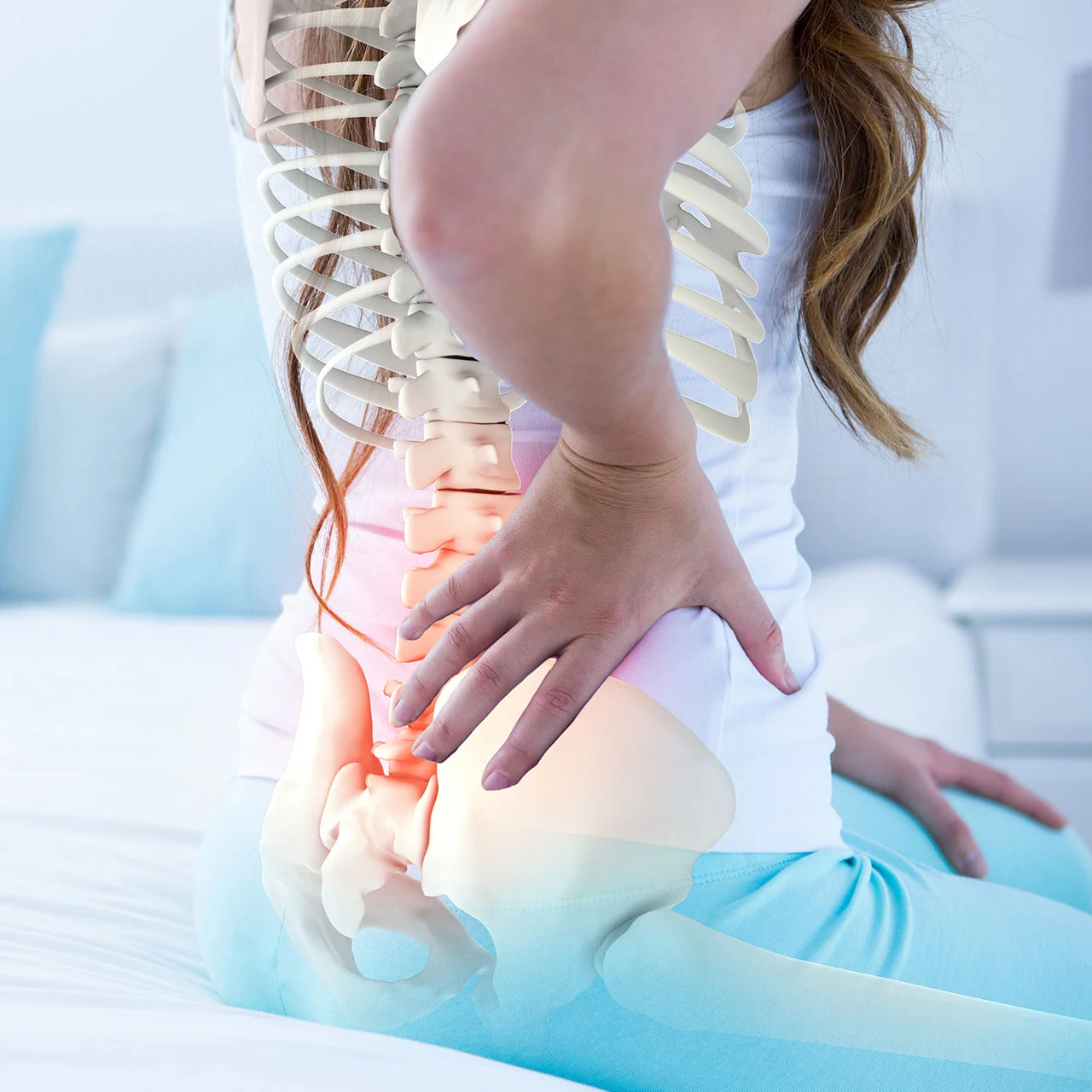
Article Summary: While sciatica is one of the most commonly searched conditions in Canada, it is commonly misunderstood. The shooting, radiating pain that travels from the lower back into the leg is not a diagnosis. It is a symptom. This article breaks down what sciatica actually is, what drives it, and why chiropractic care is one of the most effective conservative treatment options available. Written by Dr. Nicholas Cheng of Rally Point Health and Rehab, an evidence-informed chiropractor serving Markham, Unionville, Richmond Hill, Scarborough, and the broader GTA.
That deep, electric pain shooting from your lower back through your buttock and into your leg. It stops you mid-stride. It wakes you up at night. It makes sitting at your desk, standing at the kitchen counter, or stepping onto the pickleball court feel like a negotiation with your own body.
If that sounds familiar, you are not alone. Sciatica is one of the most common pain complaints we assess and treat at Rally Point Health and Rehab. It is also one of the most misunderstood.
Here is the truth: sciatica is not a diagnosis. It is a symptom. And treating the symptom without understanding the source is one of the most reliable ways to keep it coming back.

What Sciatica Actually Is
The sciatic nerve is the longest and widest nerve in the human body. It originates from nerve roots at the lumbar and sacral levels of the spine (L4 through S3), travels through the gluteal region, and runs down the back of each leg all the way to the foot. When that nerve is compressed, irritated, or inflamed anywhere along its path, the result is the characteristic radiating pain, numbness, tingling, or weakness that patients describe as sciatica.
The clinical term is sciatic neuralgia or lumbar radiculopathy. The experience is unmistakable.
What patients often do not realize is that not all leg pain is true sciatica. Identifying what is actually driving the symptoms is where effective treatment begins.
What Causes Sciatica?
Sciatica is a symptom with multiple potential drivers. The most common causes include:
Lumbar Disc Herniation
The most frequent cause of true sciatica. When the inner material of a spinal disc pushes through its outer casing and contacts or compresses a nerve root, the result is radiating pain that follows the nerve’s path into the leg. Disc herniations most commonly affect the L4-L5 or L5-S1 levels, the nerve roots that form the sciatic nerve.
Lumbar Spinal Stenosis
Narrowing of the spinal canal that places pressure on the nerve roots as they exit the spine. More common in older patients and often associated with degenerative changes in the lumbar spine. Patients with stenosis-related sciatica often find that leaning forward or sitting relieves symptoms temporarily.
Piriformis/Deep Gluteal Pain Syndrome
The piriformis is a small muscle deep in the gluteal region, through which the sciatic nerve passes or, in some individuals, runs directly through. When the piriformis (or its neighbouring muscles) becomes tight, overloaded, or inflamed, it can compress the sciatic nerve directly. This is sometimes called deep gluteal syndrome and is frequently missed by providers who default to a spinal diagnosis without assessing the peripheral pathway.
Spondylolisthesis
A condition in which one vertebra slips forward over the one below it. When significant enough to narrow the space through which nerve roots exit the spine, it can produce sciatica-like symptoms.
Postural and Movement-Driven Compression
Prolonged sitting, poor postural mechanics, and movement imbalances can create sustained pressure on lumbar structures that drives nerve irritation over time and can significantly worsen sciatica. This is increasingly common in Markham’s professional and tech workforce and in athletes whose training load outpaces their structural resilience.
What Conditions Closely Mimic Sciatica?
Sacroiliac Joint Dysfunction
The sacroiliac joint connects the sacrum to the pelvis on either side. When it becomes inflamed or dysfunctional, it can generate pain that radiates into the buttock and down the leg in a pattern that closely resembles true sciatica. Accurate diagnosis requires hands-on assessment, not imaging alone.
Recognizing True Sciatica: What to Look For
Sciatica has a recognizable symptom profile, though presentations vary. Common signs include:
- Sharp, shooting, or burning pain that radiates from the lower back or buttock into the leg
- Numbness or tingling that travels along the back of the thigh and into the calf or foot
- Weakness in the leg, particularly with specific movements
- Pain that worsens with prolonged sitting, standing, or forward bending
- Symptoms that are typically one-sided, affecting one leg more than the other
- Pain that improves temporarily with movement and worsens with sustained postures
Symptoms that are bilateral, associated with bladder or bowel changes, or accompanied by significant neurological deficit (such as saddle anesthesia) warrant urgent medical attention. If you are experiencing any of those presentations, seek emergency care promptly.
For the vast majority of sciatica cases, the appropriate first step is a thorough clinical assessment by a qualified musculoskeletal provider.
Why Chiropractic Care is One of the Most Effective Options for Sciatica
Here is where the evidence is clear and the clinical results speak for themselves.
Conservative chiropractic care is one of the most well-supported first-line treatment options for sciatica caused by lumbar disc herniation, spinal stenosis, piriformis/deep gluteal pain syndrome, and postural or movement-driven nerve compression. It is non-invasive, drug-free, and focused on resolving the underlying mechanical driver rather than managing symptoms indefinitely.
The research supporting chiropractic care for sciatica includes high-quality randomized controlled trials demonstrating meaningful reductions in pain intensity, improvements in functional capacity, and faster return to activity compared to passive management strategies. For many patients, it is the most effective option available without surgical intervention.
At Rally Point Health and Rehab, Dr. Nicholas Cheng takes a comprehensive, root-cause approach to every sciatica case. The assessment goes well beyond identifying where it hurts. It identifies what is driving the compression, how your movement and posture are contributing, and what needs to change for the pain to resolve rather than simply settle down temporarily.

The Rally Point Approach to Sciatica Treatment
No two sciatica cases are the same. The treatment plan should not be either.
Thorough Clinical Assessment
Before any treatment is delivered, Dr. Cheng conducts a detailed assessment of your lumbar spine, pelvis, sacroiliac joints, hip musculature, and neurological status. Orthopedic testing, movement screening, and a thorough history allow him to identify the specific driver of your symptoms and determine whether chiropractic care is the appropriate primary intervention or whether imaging or specialist co-management is warranted first.
Hands-On Treatment
Depending on your specific presentation, your treatment plan may include:
- Chiropractic adjustments to restore lumbar and pelvic joint mobility, reduce nerve root compression, and improve spinal mechanics
- Soft-tissue therapy targeting the piriformis, deep gluteal musculature, and lumbar paraspinals to release compression along the sciatic nerve’s pathway
- Acupuncture for nerve pain relief, inflammation reduction, and nervous system support
- Traction and decompression techniques where disc-related compression is a primary driver
- Neural mobilization techniques to restore normal movement of the sciatic nerve along its path
Progressive Rehabilitation
Winning the opening point is about relieving the pain. Winning the match is about keeping it away.
Dr. Cheng builds progressive rehabilitation programs targeting posterior chain strength and stability, hip strength, and movement quality deficits that contributed to the nerve compression in the first place. This is the phase that separates a full recovery from a cycle of flare-ups that keeps pulling patients back to the starting line.
Patients leave Rally Point Health and Rehab not just pain-free, but better equipped to protect their spine against the demands of their sport, their job, and their daily life.
Sciatica and the Active Patient: A Higher Standard
Sciatica affects active individuals differently. The urgency is greater. The stakes are higher. And the demand to return to full performance, not just function, is non-negotiable.
As an active athlete and the GTA’s leading racket sport injury specialist, Dr. Cheng brings a performance-first mindset to every sciatica case he treats. Pickleball and racket sports place significant rotational and compressive demands on the lumbar spine with every stroke, every split-step, and every lateral push.
His RacquetFit Certification and Level 1 Pickleball Coaching credentials give Dr. Cheng a biomechanical lens that extends well beyond standard chiropractic training. He assesses not just your spine, but how you move on the court, at the gym, and through your daily life. That full-picture approach is what gets active patients back to playing their best, not just feeling better.
When to Seek Treatment
The most consistent finding in the research literature is straightforward: earlier intervention produces better results.
Patients who seek treatment within the first four to six weeks of symptom onset consistently demonstrate faster recovery, lower rates of chronicity, and a reduced need for more invasive interventions compared to those who adopt a wait-and-see approach.
If your symptoms have persisted for more than two weeks, are worsening, or are beginning to affect your ability to work, exercise, or sleep, it is time to book an assessment.
Rally Point Health and Rehab offers a complimentary 15-minute consultation for patients who are unsure whether chiropractic care is the right fit for their presentation. Dr. Cheng will assess your situation, provide honest clinical guidance, and outline a clear roadmap to recovery if treatment is indicated.
No referral required. Direct billing available for most extended health plans.
Frequently Asked Questions
Time to Get Back in the Game
Sciatica does not have to be your baseline. With an accurate assessment, a targeted treatment plan, and a provider dedicated to addressing the source of your symptoms, full recovery is not just possible; it is the standard we hold ourselves to at Rally Point Health and Rehab.
Book a free 15-minute consultation today. Call or text (647) 780-8703. No referral required.
Dr. Nicholas Cheng is the founder of Rally Point Health and Rehab, a chiropractic and rehabilitation clinic located inside South Unionville Health Centre in Markham, ON. He is the only RacquetFit Certified healthcare provider in Canada and a Level 1 Certified Pickleball Coach, with hands-on experience treating athletes and everyday patients across Markham, Unionville, Richmond Hill, Scarborough, and across the broader GTA.