
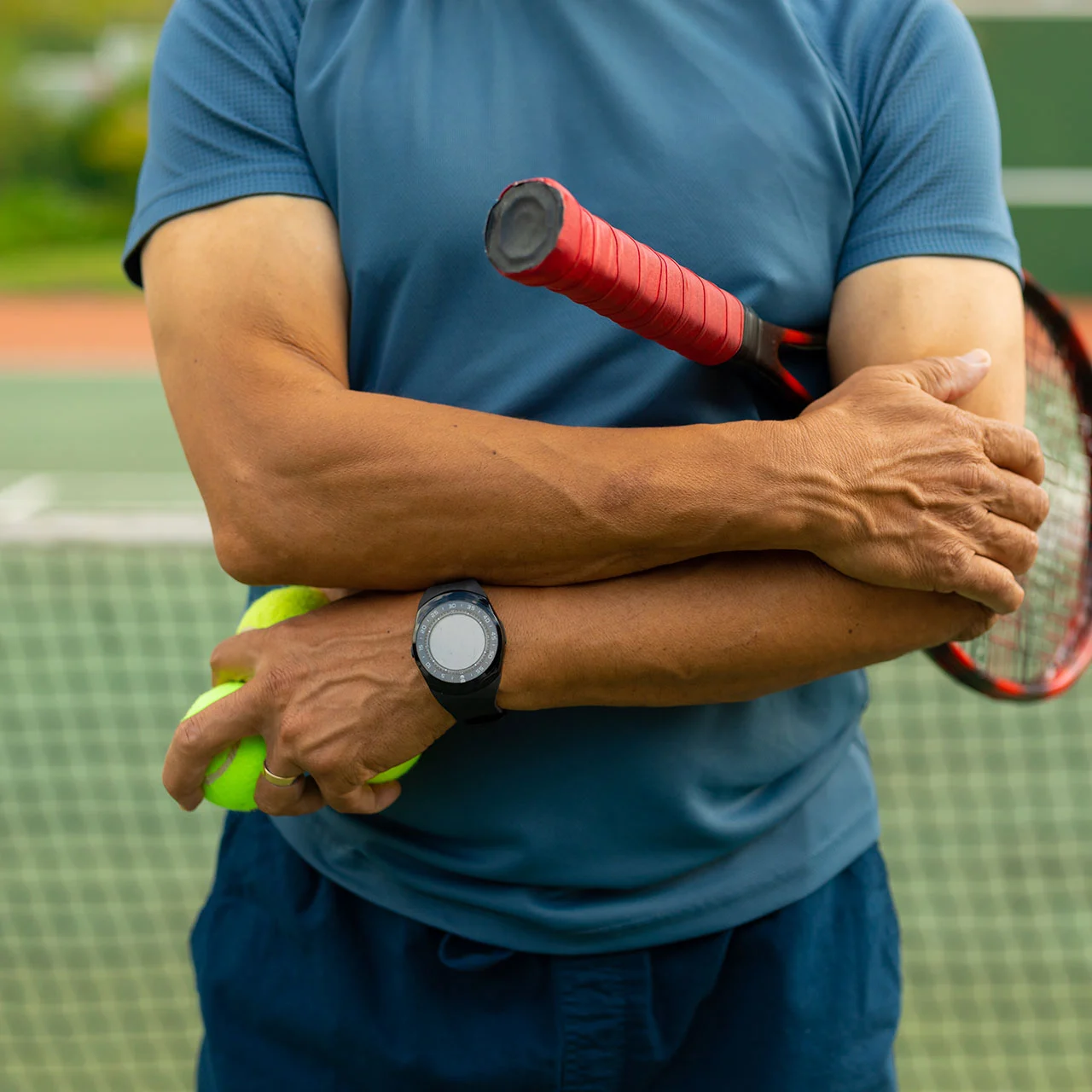
- The Diagnosis They Share
- What Makes Tennis Elbow Unique
- What Makes Pickleball Elbow Unique
- Why the Distinction Changes Your Treatment
- The Warning Signs You Should Not Ignore
- Prevention: Keeping the Rally Going Before the Pain Sets In
- Frequently Asked Questions
- Ready to Resolve It?
- Ready to Start Your Recovery?
Article Summary: Pickleball elbow and tennis elbow are alternative names for the same diagnosis. They are different sides to the same coin. But the mechanics that drive them are meaningfully different, and treating them the same way produces predictably average results. This article breaks down exactly what separates these two conditions, why racket sport athletes are uniquely vulnerable, and what a truly specialized treatment approach looks like. Written by Dr. Nicholas Cheng, the only RacquetFit Certified healthcare provider in Canada and a Level 1 Certified Pickleball Coach.
You felt it during your third game. A sharp, nagging ache on the outside of your elbow. What started as a dull soreness after a long session has gradually become a constant reminder every time you flick your wrist.
What you are experiencing is called lateral epicondylitis, also known as pickleball or tennis elbow. While they affect the same location, understanding the distinctions between the mechanics that caused them are important if you want to recover completely, and stay on the court over time.
Dr. Nicholas Cheng is the only RacquetFit Certified healthcare provider in Canada and a Level 1 Certified Pickleball Coach. He has treated local professional players and assessed hundreds of racket sport athletes across both sides of the net. Here is what every player needs to understand about these two conditions.
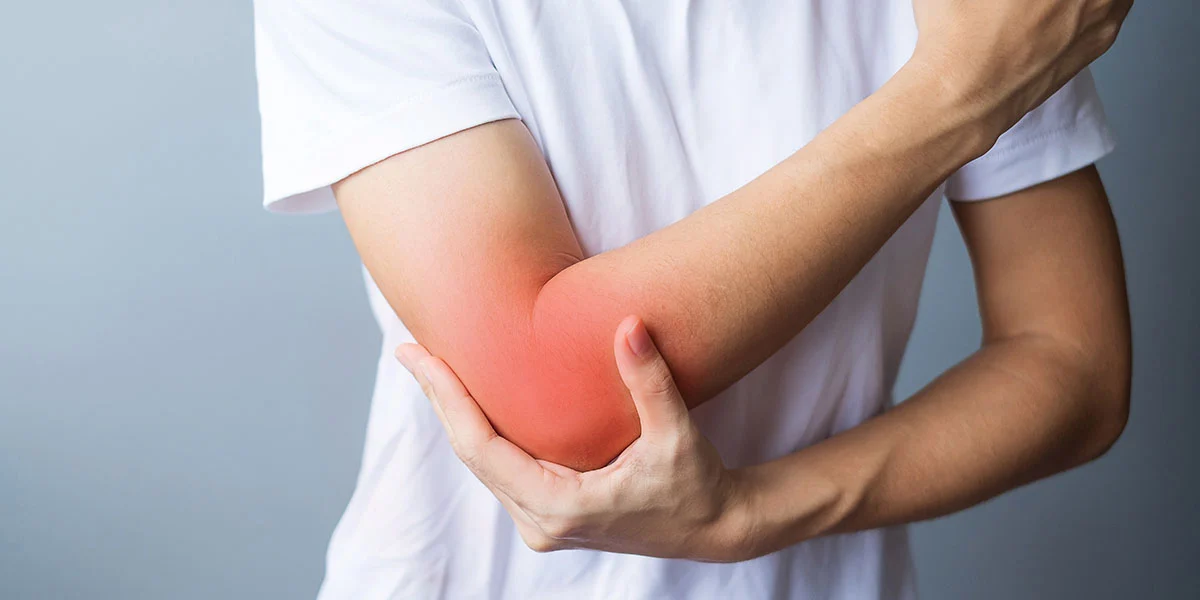
The Diagnosis They Share
Let us start with what pickleball elbow and tennis elbow have in common.
Both conditions share the same clinical diagnosis: lateral epicondylitis. This term describes the overload and micro-tearing of the extensor tendons that attach to the lateral epicondyle, the bony prominence on the outside of your elbow. The result is localized pain, tenderness, and weakness that can range from a mild annoyance to a genuinely debilitating injury.
Both conditions are classified as overuse injuries rather than acute traumatic injuries. They do not typically result from one bad shot or one unlucky rally. They develop over time, driven by accumulated stress that exceeds the tendon’s capacity to recover between sessions.
Both conditions respond exceptionally well to early, targeted care. The key is timing: players who ignore the initial warning signs and push through the pain invariably extend their recovery timelines by months.
If they share the same diagnosis, why does the distinction matter?
Because the mechanics that drive the injury are different. This distinction will slightly alter the treatment plan.
What Makes Tennis Elbow Unique
Traditional tennis elbow develops primarily from the demands of a full tennis stroke. The extended backswing, the rotational force of a groundstroke, and the impact vibration of a heavier tennis ball transmitted through a longer racket frame all contribute to a specific pattern of tendon loading.
The extensor carpi radialis brevis, the primary tendon involved in lateral epicondylitis, is placed under significant eccentric load during the deceleration phase of a tennis groundstroke. Repeated across hundreds of strokes per session, that cumulative load creates the micro-tearing that defines the condition.
Equipment factors matter here too. Racket weight, string tension, grip circumference, and head size all influence how much vibration and torque travel through the forearm with each impact. A racket that is too heavy, strung too tightly, or fitted with the wrong grip size is a mechanical liability that compounds injury risk with every shot.
Serve mechanics add another dimension. The overhead serving motion in tennis creates a distinct loading pattern in the shoulder and elbow that is not commonly seen in pickleball.
What Makes Pickleball Elbow Unique
From a biomechanical standpoint, pickleball introduces an entirely unique set of physical demands. The compact swing path, the high frequency of rapid, wrist-dominant flicks at the kitchen line, and the lighter, shorter leverage of a pickleball paddle create a distinct stress profile on the forearm musculature that differs significantly from traditional tennis mechanics.
Wrist dominant acceleration: the primary mechanical driver.
Pickleball elbow is heavily driven by ‘the flick’, a maneuver where players frequently rely on rapid, high-velocity wrist extension and snapping motions to help the ball clear the net during fast hand exchanges at the non-volley zone. This wrist-dominant motion, occurring primarily along the horizontal plane, is unique to pickleball. It places an intense, repetitive concentric and eccentric load directly onto the forearm extensors and the lateral epicondyle. Attempting to consistently generate explosive ball speed from the wrist before the tendon has developed the capacity to sustain such demand is the primary mechanical driver of this injury
Prolonged gripping mechanics and tendon fatigue.
Pickleball paddles are lighter than tennis racquets; this sounds like it would reduce injury risk. In practice, however, a lighter paddle often prompts players to overcompensate with a tighter grip. This sustained grip force acts as a significant, hidden driver of extensor tendon fatigue.
Paddle specifications matter.
The hard plastic pickleball transmits a harsh, high-frequency vibration signature that is fundamentally different from the dampened shock of a pressurized tennis ball. Rather than being absorbed by a flexible string bed, this impact force is driven directly into the hand. In pickleball, varying paddle thicknesses and core compositions play a massive role in how this shock travels; thinner, stiffer paddles amplify the micro-trauma of every hit, forcing the wrist and forearm tendons to absorb a violent spike in load that a strung tennis racquet simply does not produce.
Volume accumulates quickly.
Pickleball is highly addictive. Players go from casual participation to daily play in a matter of weeks. Tendons do not adapt that quickly. Rapid load increases are one of the most consistent drivers of pickleball elbow presentations at Rally Point Health and Rehab.
The player demographic is distinct.
Pickleball attracts a significant proportion of players over 50. Tendons in older players have reduced vascularity, slower repair cycles, and less tolerance for rapid load increases. The same playing volume that a 35-year-old recovers from easily may push a 60-year-old into a tendinopathy cycle.
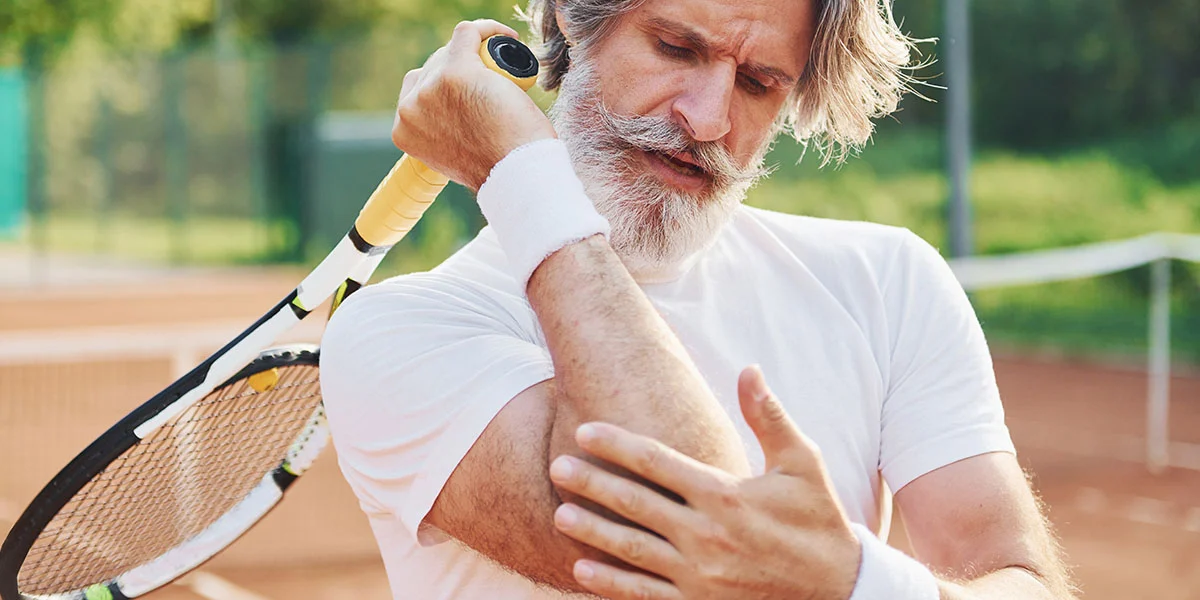
Why the Distinction Changes Your Treatment
While the foundational physiological principles of tendon healing remain consistent for both issues, a generic protocol fails to address the specific mechanical demands of each sport. The true distinction lies in the specific loading profiles, movement patterns, and strengthening exercises that must be prioritized during treatment. To successfully return to play, your rehab must be adapted to match the precise physical demands of your specific sport.
At Rally Point Health and Rehab, Dr. Cheng leverages his specialized RacquetFit certification to bridge the gap between clinical rehabilitation and on-court performance. This advanced framework enables a precise, evidence-informed analysis of racket and paddle sport injuries. By evaluating your specific condition through the dual lens of sport-specific biomechanics and equipment architecture, Dr. Cheng identifies the exact breakdown in your kinetic chain to build an individualized, highly targeted recovery path.
This means the assessment does not stop at the elbow. It extends to your swing mechanics, paddle specifications, weekly playing volume, and recovery habits between sessions.
A thorough treatment plan for pickleball elbow at Rally Point Health and Rehab typically addresses several components simultaneously:
Tendon load management.
We focus on identifying the specific activities and volumes that are exceeding your tendon’s recovery capacity, allowing us to build a modified activity plan that promotes healing without requiring total rest.
Hands-on treatment.
Soft-tissue therapy to address tendon irritation and surrounding muscular dysfunction. Chiropractic care to restore joint mechanics in the elbow, wrist, and cervical spine where contributing dysfunction may be identified. Acupuncture for pain relief and tissue recovery support.
Progressive loading rehabilitation.
Evidence-based eccentric, concentric, and isometric loading protocols designed to progressively rebuild the tendon’s capacity to handle pickleball specific loading patterns. This is the phase most patients skip. It is also the phase most responsible for long-term resolution vs. chronic recurrence.
Equipment assessment.
Paddle weight, grip size, and other paddle specifications are evaluated against your specific injury presentation. A paddle that is wrong for your game is a liability that no amount of treatment can fully compensate for.
Technique modification.
Through targeted, coaching-informed technique modification, we address the specific swing mechanics and patterns that cause muscle overload; this allows you to reduce mechanical stress without sacrificing competitive performance.
The Warning Signs You Should Not Ignore
Both pickleball elbow and tennis elbow tend to announce themselves gradually. The players who recover faster are the ones who respond early. Here are the signals that warrant a clinical assessment:
- Pain on the outside of the elbow that persists beyond your session
- Tenderness when pressing directly on the lateral epicondyle
- Weakness with gripping, particularly first thing in the morning
- Discomfort when lifting objects
- Pain that may feel better during play but returns afterward
- Gradual worsening over consecutive playing sessions
Playing through these signals without addressing the underlying driver is one of the most reliable ways to convert a four week recovery into a four month one.
Prevention: Keeping the Rally Going Before the Pain Sets In
You cannot eliminate injury risk entirely. But you can engineer your game to minimize it.
Warm up with purpose.
Dynamic wrist circles, forearm stretches, and shoulder mobility work before you step on the court. Two minutes of preparation can prevent two months of recovery.
Manage your volume deliberately.
If you are new to pickleball or returning after a break, ramp up your playing time gradually. Your tendons take time to adapt to the newly imposed demands on them.
Get your paddle assessed.
A paddle’s core thickness and material is particularly important. For example, thinner paddles deliver more load to the forearm vs a thicker paddle (eg. 14 mm vs 16 mm) during every shot. Dr. Cheng includes equipment assessments as a core component of every injury prevention consultation.
Build your forearm resilience.
Progressive concentric and eccentric wrist extension exercises performed consistently between sessions builds tendon capacity that will protect you during high volume play. This is easily one of the best investments you can do to guarantee your longevity on the court.
Take recovery seriously.
Adequate rest between sessions and tendon capacity building are not optional extras; they are critical pillars of any recovery program.
Frequently Asked Questions
Ready to Resolve It?
Pickleball elbow does not have to end your season. With an accurate biomechanical assessment, a targeted load-management plan, and a clinician who truly understands the sport, you can fully recover, correct your mechanical flaws, and return to the court stronger and more resilient than before.
Rally Point Health and Rehab is ready when you are. Book a free 15-minute consultation today. Call or text (647) 780-8703. No referral required.
Dr. Nicholas Cheng is the founder of Rally Point Health and Rehab, a chiropractic and rehabilitation clinic located inside South Unionville Health Centre in Markham, ON. He is the only RacquetFit Certified healthcare provider in Canada and a Level 1 Certified Pickleball Coach, with hands-on experience treating local professional pickleball players.