
- What Is Pickleball Elbow?
- Why Pickleball Players Are Particularly Vulnerable
- The Stages of Pickleball Elbow
- How Pickleball Elbow Is Diagnosed
- Treatment: The Rally Point Health and Rehab Approach
- How Long Does Recovery Take?
- Prevention: Staying on the Court for the Long Rally
- Frequently Asked Questions
- Ready to Resolve It for Good?
- Ready to Start Your Recovery?
Article Summary: Pickleball elbow is the single most common injury complaint among pickleball players in Canada, and one of the most frequently undertreated. Players push through the pain, modify their grip, and hope it resolves on its own. It rarely does. This guide covers everything players need to know about pickleball elbow: what it is, why it develops, how it is treated, and what a genuine prevention strategy looks like. Written by Dr. Nicholas Cheng of Rally Point Health and Rehab, the only RacquetFit Certified healthcare provider in Canada and a Level 1 Certified Pickleball Coach, serving Markham, Unionville, Richmond Hill, Scarborough, and the Greater Toronto Area.
It starts as a dull ache on the outside of your elbow after a long session. You shake it off. You ice it overnight. You show up the next morning and play another two hour session.
Three weeks later, it hurts to lift your coffee cup.
Pickleball elbow is the most common injury we treat at Rally Point Health and Rehab, and it follows a very predictable pattern: a gradual onset that players dismiss until the pain affects daily life, a period of self-management that delays proper treatment, and a recovery timeline that is two to three times longer than it would have been with early intervention.
If this sounds like something you are experiencing, this guide is for you.
Dr. Nicholas Cheng is the only RacquetFit Certified healthcare provider in Canada, a Level 1 Certified Pickleball Coach, and an active pickleball player who has treated both recreational and professional players.
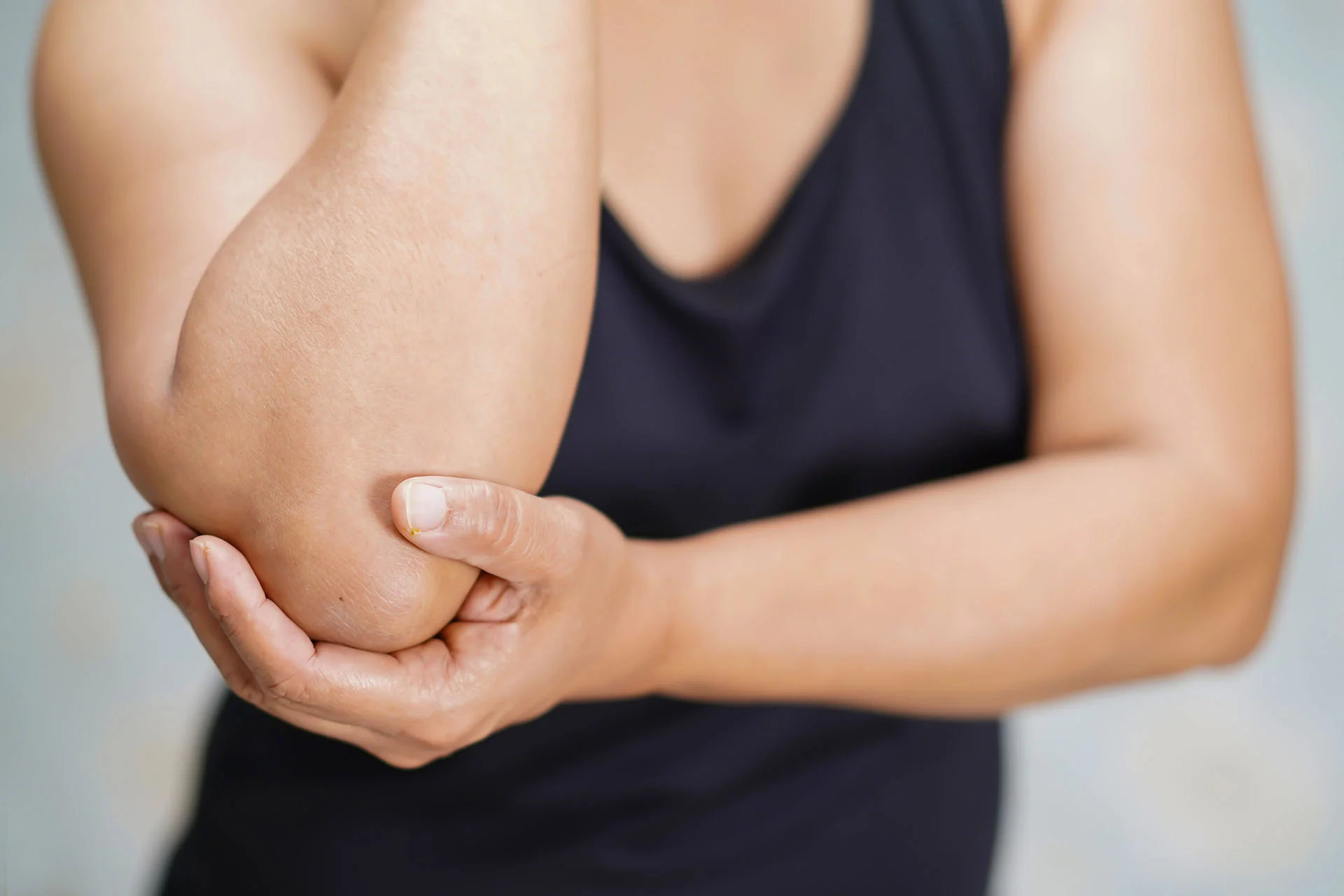
What Is Pickleball Elbow?
Pickleball elbow is the common name for a condition known as lateral epicondylitis; pickleball elbow is synonymous with tennis elbow. This condition involves the overload and micro-tearing of the common extensor tendon that attaches to the lateral epicondyle, the bony prominence on the outside of the elbow.
The extensor carpi radialis brevis is the primary muscle involved. It is responsible for extending and stabilizing the wrist during gripping and forearm movements. In pickleball, this tendon is loaded repetitively across a majority of shots; especially during flicks, drives, and overheads. When cumulative load exceeds the tendon’s capacity to repair between sessions, micro-tearing builds up. The resulting pain and tenderness quickly become unbearable.
It is worth noting that although pickleball elbow and tennis elbow share the same clinical diagnosis, there are differences that set the two apart. These differences include the biomechanical differences between the two sports (eg. certain pickleball shots, like the flick, rely heavily on the wrist), paddle vs racket characteristics, and general player demographics. It is important to take these various factors into consideration in order to provide the best results.
Why Pickleball Players Are Particularly Vulnerable
Understanding why pickleball creates such a high rate of lateral epicondylitis requires understanding what makes the sport biomechanically unique.
The Flick Is the Primary Driver
While the flick is a great way to apply pressure to your opponent, it is also a major culprit for elbow pain. Because this shot requires constant, repetitive wrist extension, it often triggers that sharp ache right in the elbow. Many player’s tendons are not strong enough to withstand the load that repeatedly flicking the wrist brings. While there are shots in tennis that require wrist extension, they are not normally performed as consecutively as in pickleball.
Grip Force Is More Important Than Players Realize
Pickleball paddles are lighter than tennis rackets, which sounds like a good thing. While there are benefits to having a lighter weight, this often translates to players using a harder grip. Sustained and excessive grip force can easily fatigue the extensor tendon.
Paddle Characteristics Matter
The hard polymer pickleball transmits a distinct vibration signature that is different to a pressurized tennis ball hitting a bead of strings. The stiffer paddle face amplifies impact force through the wrist and forearm in a way that compounds tendon loading with every ball contact. Paddle weight, grip circumference, core material, core thickness, and surface texture all contribute to how much mechanical stress travels into the extensor tendons with each shot. A paddle that is wrong for your mechanics is a liability across every rally.
Volume Increases Happen Too Quickly
Pickleball is genuinely addictive. Players go from occasional participation to daily play in a matter of weeks. Unfortunately, tendons adapt much slower toward newly imposed demands than people realize. This sudden increase in volume places an amount of stress and load that the tendon is not ready to handle; this is essentially what drives this overuse injury.
The Player Demographic Carries Additional Risk
Pickleball’s core demographic, players over 50, faces a distinct physiological hurdle: aging tendons have reduced vascularity, slower repair cycles, and a lower threshold for sudden increases in load. Consequently, a training volume that a 35-year-old tolerates effortlessly can easily push a 60-year-old into a degenerative tendinopathy cycle within just a few weeks of increasing court time.
The Stages of Pickleball Elbow
Pickleball elbow does not just appear overnight. It progresses through recognizable stages, and understanding where you are in that progression matters for treatment.
Stage 1: Post-Activity Soreness
At this stage, pain only shows up after you play and clears up within 24 hours, meaning your performance on the court is not affected yet. Because it feels minor, most players shrug it off and keep playing. Don’t make that mistake. This is your golden window for intervention: just a brief period of load management and targeted rehab right now can stop the injury in its tracks.
Stage 2: During-Activity Pain
In this phase, pain begins during active play; typically subsiding during warmups before worsening as the session continues. Grip strength begins to diminish, and recovery times between matches lengthen. Players at this stage frequently modify their mechanics or alter their grip to avoid the ache. Unfortunately, these adaptations introduce compensatory loading patterns, creating secondary soft-tissue problems.
Stage 3: Persistent Pain Affecting Daily Activities
By this stage, pain is no longer confined to the court; it actively disrupts daily activities such as gripping, lifting, typing, and turning door handles. Even holding a cup is uncomfortable, and nocturnal pain can disturb sleep cycles. On-court performance is significantly compromised, and the tendon’s capacity for self-repair is exhausted. At this point, recovery without targeted clinical intervention is exceptionally slow and highly unpredictable.
Stage 4: Chronic, Debilitating Pain
This stage is characterized by constant pain at rest, severe strength deficits, and a total inability to play. Chronic presentations at this stage involve structural tendon degeneration that demands an intensive, prolonged rehabilitation protocol. Consequently, players reaching this face an extensive recovery window that can range from six to twelve months.
The clinical reality is clear: early intervention is the single greatest predictor of a rapid recovery. Every stage of progression significantly compounds the complexity and duration of your rehabilitation.
How Pickleball Elbow Is Diagnosed
A thorough clinical assessment is the foundation of any effective treatment. At Rally Point Health and Rehab, Dr. Cheng’s assessment of a pickleball elbow presentation goes well beyond the standard orthopedic tests.
Clinical Testing
Standard orthopedic tests for lateral epicondylitis confirm the diagnosis and help identify the severity of tendon involvement. Grip strength testing quantifies functional deficit and provides a baseline for tracking recovery progress.
Cervical Spine Screening
Nerve root irritation at the C6 level can produce symptoms that mimic lateral epicondylitis closely. A thorough cervical spine examination rules out any cervical spine/nerve root involvement; if missed, it will prevent the full resolution of symptoms regardless of how well the elbow itself is treated.
RacquetFit Biomechanical Assessment
This is where Rally Point Health and Rehab’s clinical approach diverges most meaningfully from standard chiropractic assessment. Dr. Cheng’s RacquetFit Certification provides a specialized framework for evaluating pickleball elbow through the lens of sport specific biomechanics. The assessment extends to specific stroke mechanics, amongst other things.
The injury is assessed in the full context of the sport. That is the only way to identify all of the contributing factors and build a treatment plan that resolves them.
Treatment: The Rally Point Health and Rehab Approach
Effective management of pickleball elbow requires a multi-faceted approach. Single-modality interventions such as isolated rest, massage, or passive bracing produce inconsistent clinical outcomes. This is because they address only a single dimension of a complex, multi-faceted pathology.
At Rally Point Health and Rehab, treatment for pickleball elbow is built around five core components delivered in a coordinated, progressive sequence.
Component 1: Load Management
The initial phase of rehabilitation focuses on intelligent load modification rather than absolute rest.
Total cessation of play is rarely indicated and frequently counterproductive to tendon healing. Effective treatment requires identifying the precise physical demands and playing volumes that exceed the tendon’s current capacity, allowing us to design a modified activity plan that fosters tissue remodeling without triggering further degradation.
This level of customization demands sport-specific expertise. Generic advice to “reduce activity” is not true clinical guidance. Dr. Cheng’s background in coaching enables him to construct load management protocols unique to the pickleball context. He provides precise parameters on which technical aspects of play to modify, which to maintain, and how to progressively reintroduce full activity through a structured framework.
Component 2: Hands-On Treatment
Depending on your presentation and stage of condition, your hands-on treatment at Rally Point Health and Rehab may include:
Soft-tissue therapy to address the tendon irritation, surrounding muscular dysfunction, and myofascial restrictions that contribute to the pain and movement limitation.
Chiropractic adjustments to the elbow, wrist, and cervical spine where contributing joint dysfunction is identified. Restricted elbow and wrist joint mechanics alter how load is distributed through the forearm during play and perpetuate the conditions that drive tendon overload. Restoring that mobility is a core component of a complete treatment plan.
Acupuncture for pain relief, local tissue healing stimulation, and trigger point release in the forearm musculature. Acupuncture is particularly effective for the chronic tendinopathy presentations where tissue vascularity is reduced and the healing response has stalled. The controlled micro-injury created by needle insertion stimulates local blood flow and growth factor release that jumpstarts the repair process.
Component 3: Progressive Tendon Loading Rehabilitation
This phase represents the most critical, yet frequently omitted, component of effective pickleball elbow treatment. Neglecting this stage is the primary reason acute tendon pain degrades into a chronic, recurring condition.
Clinical evidence demonstrates that progressive mechanical loading is the definitive intervention for restoring tendon architecture and load-bearing capacity. Utilizing precise isometric and eccentric loading protocols, sequenced accurately to match your specific stage of pathology, rebuilds the structural integrity of the extensor tendon in a way that passive modalities cannot replicate.
At Rally Point Health and Rehab, Dr. Cheng builds individualized loading programs based on the stage of your condition, your current tissue tolerance, and your return-to-court timeline. The program scales systematically, moving from gentle isometric holds to rebuild basic capacity, to eccentric and sport-specific loading as your tissue heals, and finally to the high-velocity demands of competitive match play.
Component 4: Equipment Assessment
A paddle assessment is a routine component of pickleball elbow management at Rally Point Health and Rehab. The variables that matter most include:
Grip circumference. A grip that is too small forces the player to squeeze harder to maintain control, amplifying forearm extensor load across every shot. Modifying the grip to have an appropriate size is one of the easiest things you can do.
Paddle weight. Heavier paddles require more strength to wield. Lighter paddles can cause players to over grip. The optimal paddle weight for injury management depends on the player’s strength, technique, and the specific demands of their game.
Core stiffness and core thickness. Stiffer paddle cores and thicker cores transmit more shock (eg. 16mm vs 14mm) and twist torque (think twist weight) into the forearm. For players managing active tendinopathy, a softer and thicker core reduces the mechanical stimulus to the already irritated tendon.
Component 5: Technique Modification
When faulty mechanics, poor grip habits, incorrect forearm positioning, or sub-optimal swing patterns contribute to tendon overload, technical correction becomes a necessity rather than a luxury. Dr. Cheng’s Level 1 Pickleball Coaching certification and RacquetFit credentials provide a highly specialized biomechanical framework. This allows him to translate objective clinical findings directly into actionable, court-specific adjustments.
Addressing these underlying mechanics is what ultimately breaks the cycle of re-injury once an acute episode resolves. This cross disciplinary expertise bridges the gap between rehabilitation and sport performance; something standard clinical training cannot replicate.
How Long Does Recovery Take?
Recovery timelines for pickleball elbow can vary significantly based on the stage of the condition, how quickly treatment begins, and the individual
Stage 1 presentations caught early with appropriate load management and targeted rehabilitation can resolve in two to four weeks.
Stage 2 presentations typically require four to eight weeks of consistent treatment and progressive rehabilitation.
Stage 3 presentations involving persistent daily pain and meaningful functional deficit generally require eight to twelve weeks or longer.
Stage 4 chronic presentations with structural tendon changes may require six to twelve months of carefully managed progressive rehabilitation.
The single most reliable predictor of recovery time is how soon treatment begins after symptoms first appear. Every week of playing through unmanaged pickleball elbow adds to the recovery timeline.
Prevention: Staying on the Court for the Long Rally
Preventative care is better than interventional care. Here is what the evidence and Dr. Cheng’s clinical and coaching experience support as the most effective prevention strategies.
Build Forearm Resilience Proactively
Progressive eccentric wrist extension exercises performed consistently between sessions build the extensor tendon capacity that protects against the cumulative load of regular play. Two sets of fifteen repetitions three times per week is an easy way to prolong your longevity on the court. Do not wait for symptoms to appear before starting.
Warm Up With Intention
Implementing dynamic wrist circles, forearm mobility, progressive grip loading, and shoulder activation prior to play significantly mitigates acute tendon loading during early rallies. Static stretching alone is insufficient for injury prevention. The clinical standard requires active movement preparation that systematically and progressively loads the entire forearm extensor chain to prepare the tissue for the demands of play.
Manage Your Volume Deliberately
Tendons do not adapt as quickly as other systems, like your cardiovascular system, to new imposed loads and demands. From a cardiovascular standpoint, you may be able to handle hours of consecutive play while your extensor tendons were already exhausted shortly after the first hour of play. To protect yourself, increase your playing volume gradually, especially after time away from the court, and build in dedicated recovery time between sessions.
Get Your Equipment Right
Grip size, paddle weight, and core thickness/composition are not trivial variables. They are mechanical inputs that directly influence the force transmitted to your extensor tendons with every ball contact. If you have not had your equipment assessed in the context of your mechanics and injury history, it is worth doing before the next season starts.
Address Weakness Before It Becomes Injury
Rotator cuff weakness, poor scapular control, and restricted thoracic mobility all alter how force is distributed through the upper extremity during play; this can place compensatory load on the elbow. Addressing these upstream vulnerabilities through targeted exercise programming is one of the most effective injury prevention strategies available for racquet sport athletes.
Do Not Play Through Warning Signs
Post-session soreness that persists beyond 24 hours, tenderness on the lateral epicondyle, or grip weakness that is gradually getting worse are signals your body is sending. Responding sooner rather than later is the difference between a two week interruption and a three month one.
Frequently Asked Questions
Ready to Resolve It for Good?
Lateral epicondylitis does not have to dictate your competitive timeline.
Through precise clinical assessment, individualized progressive loading, and a specialized provider who bridges the gap between anatomy and sports mechanics, a complete recovery is entirely achievable. At Rally Point Health and Rehab, restoring your tissue capacity and returning you safely to full performance is not just the goal, it is our absolute standard of care.
Book a free 15-minute consultation today. Call or text (647) 780-8703. No referral required.
Dr. Nicholas Cheng is the founder of Rally Point Health and Rehab, a chiropractic and rehabilitation clinic located inside South Unionville Health Centre in Markham, ON. He is the only RacquetFit Certified healthcare provider in Canada and a Level 1 Certified Pickleball Coach, with hands-on experience treating athletes and active individuals across Markham, Unionville, Richmond Hill, Scarborough, and the GTA.